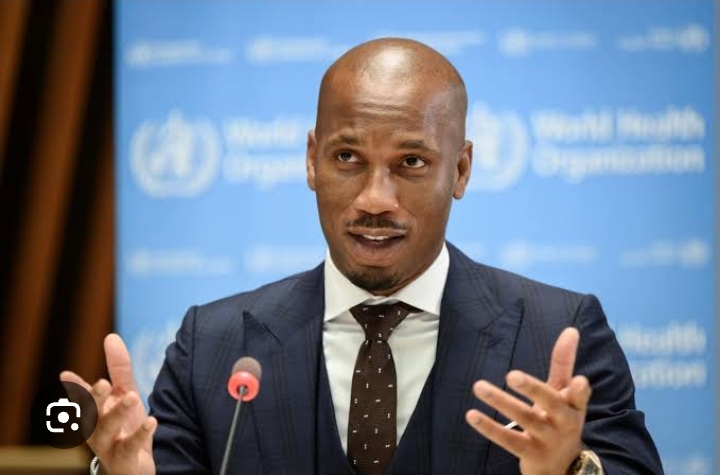
In the aftermath of Arsenal’s disappointing defeat, former Chelsea striker Didier Drogba has shared a measured but emotionally charged reaction, making it clear that his frustration is not directed at the result itself, nor entirely at manager Mikel Arteta, but rather at what he perceives as a failure to properly support a young player who gave everything on the pitch.
Speaking candidly in a post-match discussion, Drogba emphasized that defeats are a natural part of football, especially at the highest level where expectations are immense and margins for error are razor-thin. According to him, criticism purely based on results often overlooks deeper issues within a team’s structure and decision-making. “Losing games happens,” Drogba reportedly said. “Even the best teams in the world go through it. That’s not what bothers me.”
Instead, Drogba’s concern centered around the performance and treatment of Max Dowman, a relatively lesser-known figure who, in his view, showed determination, commitment, and resilience despite the team’s overall struggles. Drogba highlighted that Dowman’s effort stood out in a match where many Arsenal players appeared below their usual standards.
“What I saw was a young player trying his best, fighting for every ball, showing heart,” Drogba explained. “But football is not just about effort—it’s about support, structure, and putting players in positions where they can succeed. I don’t think that happened.”
The Ivorian legend suggested that Dowman may have been left exposed due to tactical decisions or lack of cohesion within the squad. He implied that when a team underperforms collectively, it is often the younger or less established players who bear the brunt of criticism, even when they are among the few showing genuine intent.
Drogba’s comments subtly point toward broader concerns about how Arsenal are managing player development and in-game adjustments. While Arteta has been widely praised for transforming the club into title contenders in recent seasons, moments like this raise questions about his handling of difficult situations and his ability to protect emerging talents during high-pressure matches.
Observers of the game have noted that Arsenal’s tactical setup in the match may have left certain players isolated, particularly in key areas of the pitch. Dowman, tasked with responsibilities that may have exceeded his experience level, appeared to struggle at times—but crucially, never stopped trying. For Drogba, that distinction matters.
“There are players who hide when things go wrong, and there are players who step up,” he added. “From what I saw, this boy didn’t hide. That deserves recognition, not neglect.”
The comments have sparked conversation among fans and pundits alike, with many agreeing that while Arteta cannot be blamed for every individual performance, there is a responsibility to ensure that all players—especially younger ones—are adequately supported both tactically and mentally.
For Arsenal, the defeat represents more than just dropped points; it exposes underlying vulnerabilities that could prove costly if not addressed. For Arteta, it is another moment of scrutiny in a season filled with high expectations. And for Dowman, it is a reminder of the harsh realities of top-level football—where effort alone is not always enough, and where development often depends as much on guidance as it does on talent.
Drogba’s perspective ultimately reframes the narrative. Rather than focusing solely on failure, he calls attention to responsibility—how teams nurture their players, how managers adapt under pressure, and how individuals are treated when the collective falls short. It’s a message that goes beyond one match and speaks to the core of what builds successful teams over time.