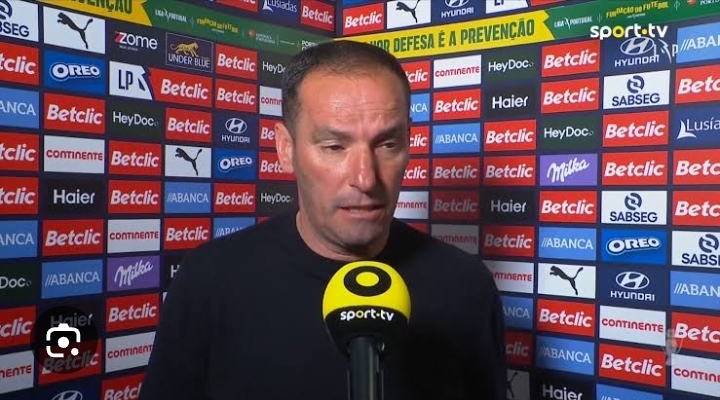
Sporting CP head coach Rui Borges delivered a gracious and insightful post-match assessment following his side’s clash with Arsenal, choosing to highlight the performance of Kai Havertz as a defining factor in the encounter.
Despite the competitive intensity of the fixture, Borges’ remarks reflected a deep respect for the German international’s influence on the game and his growing importance within Mikel Arteta’s setup.
The match itself was a high-tempo, tactically engaging affair that saw Arsenal edge Sporting CP, with Havertz emerging as the standout performer. Operating in a fluid attacking role, the former Chelsea man showcased intelligence, composure, and a keen eye for decisive moments. His goal proved to be the difference, but beyond that, his all-round contribution left a lasting impression—not only on fans and pundits, but also on the opposition bench.
Speaking after the final whistle, Borges did not hesitate to single out Havertz for special praise. “He is a player of great quality and intelligence,” the Sporting coach said. “Today, he showed exactly why he is so valuable to Arsenal. It’s not just the goal—his movement, his understanding of space, and the way he links play make him very difficult to deal with.”
Borges went on to emphasize how Havertz’s versatility caused problems for Sporting’s defensive structure. Throughout the match, the German forward drifted between lines, often pulling defenders out of position and creating space for his teammates. This tactical awareness, according to Borges, was one of the key reasons Arsenal were able to maintain control during crucial phases of the game.
“It’s rare to find a player who can adapt so seamlessly to different roles,” Borges continued. “He can play as a forward, an attacking midfielder, even drop deeper when needed. That flexibility makes him unpredictable, and today we felt that on the pitch.”
Havertz’s journey at Arsenal has not always been smooth. Following his high-profile move, he initially faced criticism and skepticism from sections of the fanbase and media. However, performances like this are steadily reshaping that narrative. Under the guidance of Mikel Arteta, Havertz appears to have found his rhythm, becoming a more confident and decisive presence in the final third.
Borges acknowledged this evolution, noting that Havertz now plays with a sense of authority and belief that was perhaps missing earlier in his Arsenal career. “You can see his confidence has grown,” he said. “He plays with freedom now, and that makes a big difference. When a player of his ability is confident, he becomes very dangerous.”
The Sporting coach also praised Arsenal as a whole, describing them as a well-organized and disciplined side, but reiterated that Havertz was the individual who tipped the balance. “Arsenal have many good players, but today Havertz made the difference. He understood the game better than anyone in certain moments.”
For Arsenal, the victory represents another important step in their European campaign, while for Sporting CP, it serves as a learning experience against one of Europe’s top sides. Borges remained optimistic about his team’s chances in future fixtures, but admitted that containing players of Havertz’s caliber requires near-perfect execution.
As the spotlight continues to shine on Arsenal’s attacking options, Havertz’s performance—and the praise it earned from an opposing coach—may mark a turning point in how he is perceived. No longer just a player finding his feet, he is increasingly becoming a match-winner capable of influencing games at the highest level.
In football, respect from your opponent is often the highest form of recognition. On this occasion, Rui Borges’ words made it clear: Kai Havertz didn’t just score a goal—he commanded the game.