Mikel Arteta has moved quickly to clarify one of the biggest talking points following Arsenal’s high-stakes clash with Manchester City, revealing that the decision to bench Viktor Gyökeres was purely down to fitness concerns rather than tactics or form.
In the aftermath of a tense encounter that could have major implications for the Premier League title race, questions were immediately raised when Gyökeres—one of Arsenal’s most in-form attacking threats—was surprisingly left out of the starting lineup. Many fans and pundits expected the powerful Swedish striker to lead the line against Pep Guardiola’s side, especially given his recent performances and physical presence, which seemed tailor-made to trouble City’s defense.
However, Arteta was quick to shut down speculation, explaining that the decision was made with the player’s condition in mind rather than any strategic gamble.
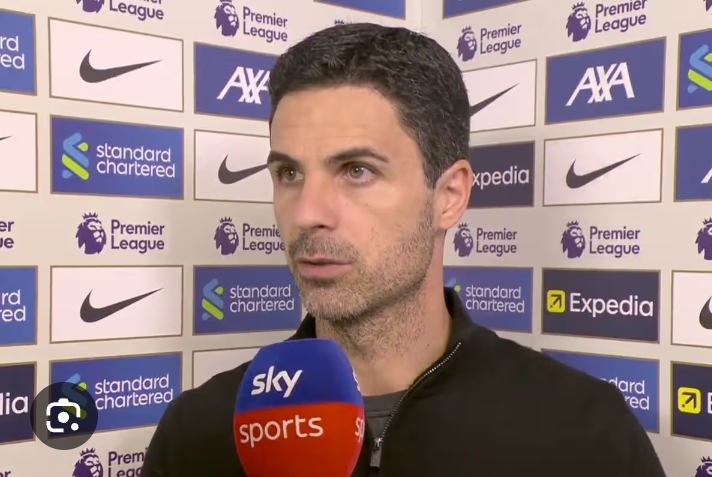
Speaking after the match, the Arsenal manager admitted that Gyökeres had been struggling with a minor issue in the days leading up to the game. While not a serious injury, it was enough to raise concerns within the club’s medical staff about his ability to perform at full intensity in such a demanding fixture.
Arteta emphasized that facing Manchester City requires players to be at their absolute peak, both physically and mentally. According to him, selecting a player who is even slightly below 100% fitness could have posed a risk—not only to the player’s health but also to the team’s overall balance and performance.
The Spaniard explained that Gyökeres was assessed right up until matchday, with the coaching and medical teams closely monitoring his condition. Although the striker was eager to play and reportedly pushed to be included from the start, the final decision was made to use him more cautiously, with the possibility of introducing him later in the game if needed.
Arteta’s comments highlight a broader philosophy he has maintained throughout his tenure at Arsenal: prioritizing player welfare and long-term availability over short-term gains. With the club competing on multiple fronts and pushing for major honors, managing fitness levels has become increasingly critical.
The absence of Gyökeres from the starting eleven inevitably affected Arsenal’s attacking approach. Without his physicality and ability to stretch defenses, the team had to rely more on movement and combination play in the final third. While there were moments of promise, many observers felt the Gunners lacked a focal point in attack during key phases of the match.
Despite that, Arteta refused to frame the decision as a mistake. Instead, he pointed out that the squad is built to cope with such situations, stressing the importance of depth and adaptability. He also hinted that rushing Gyökeres back into action could have resulted in a more serious setback, potentially ruling him out of crucial fixtures ahead.
The manager’s explanation may not completely silence critics, especially given the magnitude of the match, but it does offer important context. In modern football, where fixture congestion and physical demands are higher than ever, even minor fitness issues can influence big decisions.
For Gyökeres, the focus now shifts to recovery and ensuring he returns to full fitness as quickly as possible. Arsenal supporters will be hoping to see him back at his best in the coming games, particularly as the title race intensifies and every point becomes vital.
Arteta, meanwhile, remains firm in his stance. His message is clear: no player, regardless of importance, will be risked unless fully ready. In a season where fine margins could decide everything, decisions like this—though controversial—may ultimately prove crucial in the bigger picture.