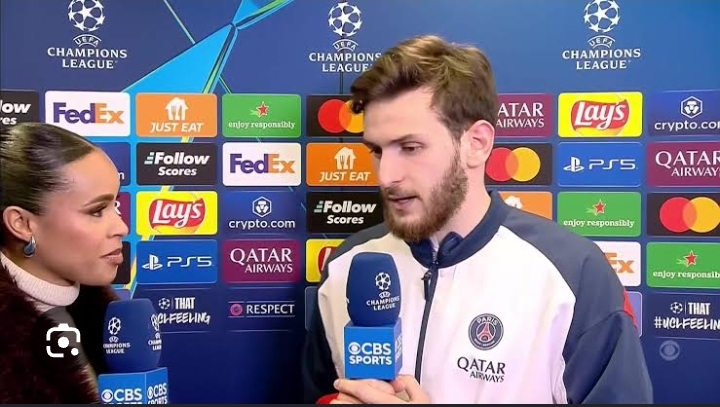
Khvicha Kvaratskhelia has offered a candid and respectful assessment of Arsenal, describing the North London side as one of the most difficult opponents to face in Europe due to their exceptional defensive organization and tactical discipline.
The Georgian winger, known for his flair and unpredictability in the final third, admitted that breaking down Arsenal’s backline requires far more than individual brilliance—it demands patience, precision, and collective intelligence.
Speaking after a recent European encounter, Kvaratskhelia highlighted how Arsenal’s defensive structure limits space in dangerous areas, forcing attackers into uncomfortable positions. According to him, the Gunners have developed a system where every player understands their role without the ball, making it incredibly hard for even the most creative forwards to find openings. “They don’t just defend as a back four,” he explained. “They defend as a team. When you receive the ball, you already have two or three players closing you down.”
The praise reflects the transformation Arsenal have undergone under manager Mikel Arteta. Once criticized for inconsistency at the back, the team has evolved into one of the most defensively reliable units in European football. Arteta’s emphasis on structure, pressing triggers, and positional awareness has turned Arsenal into a side that not only controls possession but also neutralizes opposition threats with remarkable efficiency.
Kvaratskhelia, who has built a reputation for tormenting defenders with his dribbling and direct running, acknowledged that Arsenal’s defenders rarely dive into challenges recklessly. Instead, they maintain shape and force attackers wide or into less threatening zones. This calculated approach, he noted, reduces the effectiveness of players who rely on one-on-one situations to create chances.
He also pointed out the role of Arsenal’s midfield in shielding the defense. Players tracking back quickly and cutting passing lanes make it difficult to progress the ball centrally. “You feel like there is no space,” Kvaratskhelia said. “Even when you think you have time, someone is there to block or intercept.”
Much of Arsenal’s defensive strength has come from their cohesion rather than reliance on a single standout defender. The backline operates with a high level of communication, while the goalkeeper’s positioning and composure add an extra layer of security. This unity, Kvaratskhelia suggested, is what separates Arsenal from many other top teams who may have individual quality but lack collective discipline.
The Georgian international’s comments echo a growing sentiment across European football. Several players and managers have recently spoken about Arsenal’s defensive resilience, especially in high-stakes matches where margins are minimal. Their ability to absorb pressure, remain compact, and transition quickly into attack has made them a formidable opponent in both domestic and continental competitions.
For attackers like Kvaratskhelia, facing Arsenal is not just a physical battle but a mental one. The constant pressure, limited space, and disciplined positioning require quick decision-making and near-perfect execution. Any lapse in concentration is quickly punished, while moments of brilliance are often smothered before they can fully develop.
Despite the challenge, Kvaratskhelia views such encounters as opportunities for growth. Competing against a defensively elite side like Arsenal pushes attackers to elevate their game and find new solutions. “You learn a lot playing against teams like this,” he added. “It makes you a better player.”
As Arsenal continue to build their identity around defensive solidity and tactical intelligence, praise from elite attackers like Kvaratskhelia only reinforces their reputation. In a football era often dominated by attacking headlines, the Gunners are proving that a well-drilled defense remains the foundation of success at the highest level.