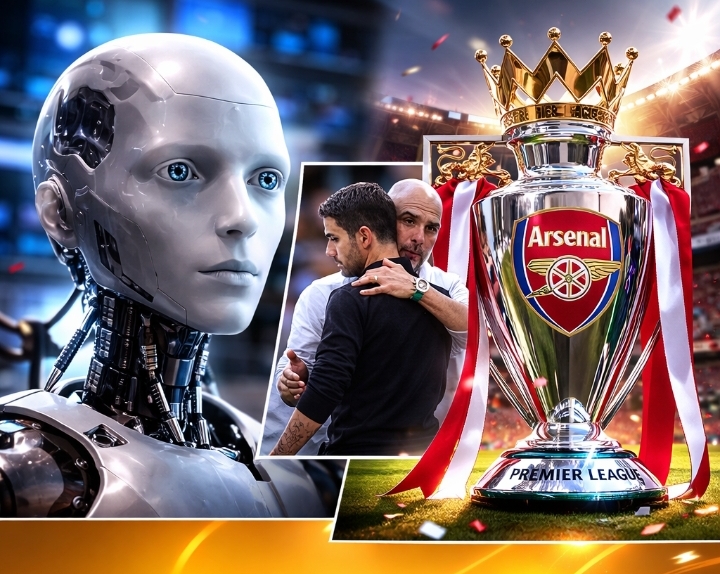
A leading football supercomputer has delivered a stunning prediction that will send excitement coursing through North London — Arsenal are projected to win the UEFA Champions League this season following the latest knockout-stage simulations.
After the Round of 16 draw placed Arsenal against Bayer Leverkusen, data analysts ran thousands of simulations to map out the remainder of the competition. The result? Arsenal emerged as the most likely champions, outperforming Europe’s traditional heavyweights in a significant percentage of projected outcomes.
The Gunners’ route to the latter stages is seen as favourable compared to several rivals. While other giants were paired together in high-risk ties, Arsenal avoided immediate clashes with clubs such as Real Madrid and Manchester City, both of whom remain among the most feared sides in European football. Instead, the simulations suggest that if Arsenal overcome Leverkusen, their statistical probability of reaching the semi-finals rises sharply.
According to the predictive model, Arsenal progressed past Leverkusen in the majority of simulated ties, thanks largely to their defensive solidity and attacking efficiency in European competition this season. The algorithm highlighted their ability to control possession, create high-quality chances, and maintain a strong expected goals differential — key indicators that often determine success in two-legged knockout matches.
Should they reach the quarter-finals, Arsenal could face the winner of Sporting CP and Bodo/Glimt. On paper, that represents a more manageable hurdle compared to potential matchups elsewhere in the bracket. The supercomputer’s projections gave Arsenal a strong probability of advancing from that stage as well, with their depth and tactical flexibility cited as decisive factors.
Manager Mikel Arteta has built a side capable of competing with Europe’s elite, and the numbers now appear to support that belief. Under his guidance, Arsenal have evolved from promising contenders into a balanced and mature team capable of grinding out results away from home while remaining ruthless at the Emirates Stadium.
Perhaps most intriguing is the simulation’s projection for the latter rounds. In several scenarios, Arsenal were matched against clubs such as Barcelona, Atletico Madrid, or even Manchester City in a potential final showdown. Despite the pedigree of those opponents, Arsenal’s win probability remained marginally higher due to form trends, squad consistency, and fewer injury disruptions in the model.
The data also factored in momentum. Arsenal’s strong league-phase performance boosted their coefficient rating within the simulation, meaning they were statistically more likely to score first and control matches. Historically, teams that score first in knockout ties significantly increase their chances of progression — another detail that tilted projections in Arsenal’s favour.
For supporters, this prediction represents more than just numbers on a screen. Arsenal have not lifted Europe’s most prestigious trophy in their history, coming closest in 2006. A supercomputer backing them to finally conquer the continent will only heighten belief that this could be a defining season.
Of course, football is not played on spreadsheets. Injuries, refereeing decisions, tactical surprises, and moments of individual brilliance can defy even the most sophisticated models. But what these simulations suggest is clear: Arsenal are no longer outsiders dreaming of glory — they are statistically the team to beat.
As the knockout rounds approach, the pressure will intensify. Every pass, every defensive block, and every goal could edge the Gunners closer to fulfilling what the supercomputer already believes — that this is the year Arsenal finally lift the UEFA Champions League trophy.