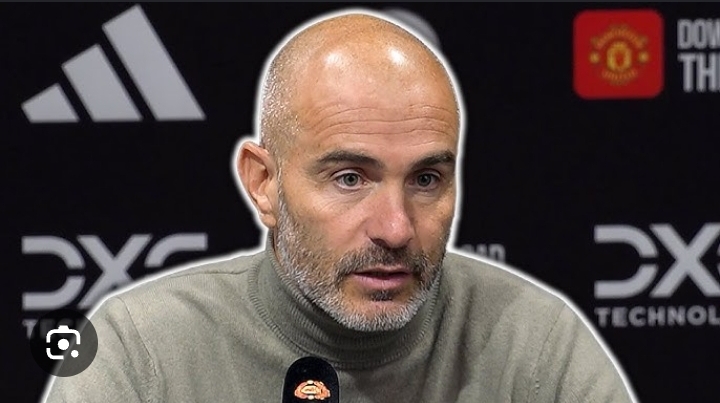
Fresh speculation is building around Enzo Maresca after reports and discussions suggested the Italian tactician would be open to taking charge of Arsenal F.C. if the opportunity ever arose—an idea that has quickly captured attention across the football world.
Maresca, who has steadily built a reputation as one of Europe’s most intriguing young coaches, is widely admired for his tactical intelligence and calm, methodical approach to management. Having worked under elite influences and developed a style rooted in positional play and structured buildup, he represents the new generation of managers inspired by modern football philosophy. His coaching identity—often described as a blend of control, creativity, and discipline—has drawn comparisons to some of the game’s most respected tacticians.
Although there is no official confirmation of direct talks with Arsenal, the mere suggestion that Maresca would be “ready” for such a role has sparked debate about what the future could hold at the North London club. Arsenal are currently led by Mikel Arteta, who has overseen a period of significant progress, turning the team into consistent title challengers and a strong force in Europe. Yet, as is often the case at elite clubs, any sign of uncertainty or pressure can open the door to speculation about potential successors.
Maresca’s admiration for Arsenal is no secret. In previous interviews and pre-match comments, he has openly praised the club’s structure, tactical system, and ability to dominate games both offensively and defensively. He has highlighted how Arsenal’s set-piece efficiency and overall organization make them one of the most difficult teams to face in Europe, acknowledging the strength of the system Arteta has built.
Such respect naturally fuels the narrative that Maresca would be keen to take on the challenge of managing a club like Arsenal. For any ambitious coach, the appeal is obvious: a young, talented squad, a clear footballing philosophy, and a platform to compete for major trophies both domestically and in the Champions League.
Maresca’s own career trajectory adds further intrigue to the discussion. After achieving success at club level—including silverware and notable performances—his time in management has been marked by both promise and turbulence. He guided teams with a clear identity and won important honors, but his departure from Chelsea F.C. in early 2026 highlighted the challenges of working under intense pressure and differing visions at top clubs.
That experience may have strengthened his desire for a project built on stability—something Arsenal have increasingly been associated with under Arteta. The club’s long-term planning, patience with managerial development, and commitment to a clear playing style could align perfectly with Maresca’s football philosophy.
From a tactical standpoint, the potential fit is fascinating. Arsenal’s current system emphasizes possession, structured buildup, and positional discipline—principles that closely mirror Maresca’s own approach. His teams are known for building from the back, controlling midfield spaces, and maintaining balance between attack and defense, all of which are hallmarks of Arsenal’s current identity.
However, it is important to separate speculation from reality. There is no confirmed approach from Arsenal, nor any indication that Arteta’s position is immediately under threat. In fact, the Spaniard remains central to the club’s long-term plans, having recently extended his contract and continued to deliver strong performances.
Still, football is a game of constant change, and managerial situations can evolve quickly. The idea of Maresca positioning himself as a potential candidate—even hypothetically—reflects both his ambition and the regard in which Arsenal are held as a destination.
Among fans, reactions have been mixed. Some Arsenal supporters view Maresca as an exciting alternative should the club ever need a new direction, while others remain firmly behind Arteta and see the rumors as premature. Neutral observers, meanwhile, recognize that Maresca’s tactical acumen and modern approach would make him a compelling option for any top club.
Ultimately, whether or not Maresca ever gets the chance to manage Arsenal remains uncertain. But the conversation itself speaks volumes about his growing reputation in the game. Being linked—even speculatively—to one of Europe’s biggest clubs is a sign that his work has not gone unnoticed.
For now, the story remains one of possibility rather than probability. Yet in football, where opportunities can arise unexpectedly, the idea of Enzo Maresca stepping into the Emirates dugout one day is a narrative that will continue to generate intrigue as the managerial landscape evolves.