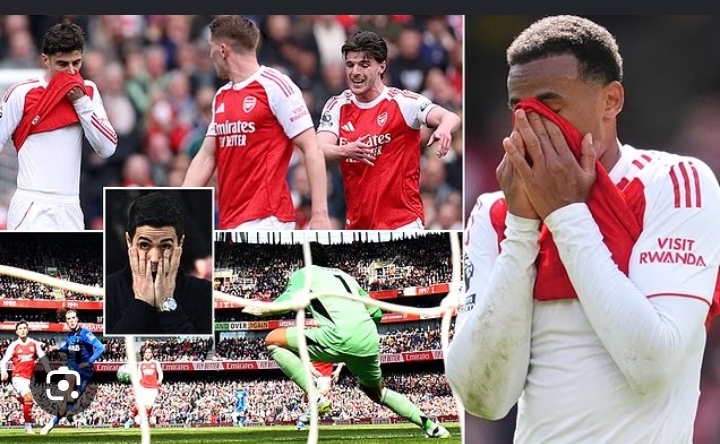
Ousmane Dembélé has sparked fresh debate across European football after reportedly claiming that Arsenal FC are a far more difficult opponent to face than Bayern Munich.
The statement, coming at a time when Europe’s elite clubs are battling for supremacy, highlights just how much Arsenal’s reputation has grown in recent seasons.
Dembélé, known for his explosive pace, technical brilliance, and unpredictability on the wing, has faced a wide range of top-level opposition throughout his career—from domestic giants to Champions League heavyweights. His experience against Bayern Munich, one of Europe’s most decorated and feared sides, makes his comparison particularly striking. For a player of his pedigree to rate Arsenal as the tougher challenge signals a shift in how the North London club is perceived on the continental stage.
According to sources close to the player, Dembélé pointed to Arsenal’s defensive organization as a key factor. Under their current tactical system, Arsenal have developed into a compact, disciplined unit that limits space and forces opponents into uncomfortable positions. Unlike Bayern Munich, who often rely on high pressing and attacking dominance, Arsenal combine defensive solidity with quick transitional play—making them unpredictable and difficult to break down.
What makes Arsenal especially challenging, Dembélé suggested, is their balance. While Bayern Munich are renowned for their attacking firepower and relentless pressure, their style can sometimes leave spaces that skilled attackers can exploit. Arsenal, on the other hand, appear more measured. They defend as a collective and attack with precision, rarely overcommitting and maintaining structure even during high-intensity phases of play.
Another aspect highlighted was Arsenal’s midfield control. Their ability to dictate tempo, recover possession quickly, and transition efficiently from defense to attack creates constant pressure on opponents. Dembélé is believed to have noted that against Arsenal, players often find themselves with less time on the ball and fewer clear opportunities to exploit defensive gaps.
The psychological element also plays a role. Arsenal’s recent performances in Europe have built a sense of confidence and belief within the squad. This mental resilience, combined with tactical discipline, makes them a formidable opponent in knockout competitions where small margins often decide outcomes.
In contrast, Bayern Munich’s approach, while incredibly effective, is more familiar to many top players. Their system, built on intensity and attacking width, has been consistent over the years. As a result, elite opponents often prepare specifically for Bayern’s strengths. Arsenal’s evolving style, however, presents a more complex challenge, as it blends multiple tactical approaches and adapts depending on the opponent.
Dembélé’s comments have naturally fueled discussions among fans and analysts. Supporters of Arsenal see it as validation of the club’s progress and growing stature in Europe. Meanwhile, Bayern Munich fans may view it as an underestimation of a team that has consistently delivered success at the highest level.
Regardless of perspective, the comparison underscores an important reality: Arsenal are no longer seen as underdogs in elite European competition. Instead, they are increasingly viewed as one of the most complete and difficult teams to face.
As the Champions League reaches its decisive stages, statements like Dembélé’s only add to the intrigue. Whether Arsenal can translate this growing reputation into silverware remains to be seen, but one thing is clear—top players across Europe are taking notice, and they are not taking Arsenal lightly.